One reading strategy that helped me understand the text was reading the introduction of the text. Reading the introduction of the text allowed me to get background information on what the author would be talking about and understand the main reason that will be talked about. Although this did help me understand the text more, if the introduction was too long and I understood what the author is aiming to talk about, I would skim the rest of the introduction to not waste time. I would recommend this strategy to a friend because it makes it easier to read the rest of the text. One way I would amend it is by making the introduction as short as possible while keeping all the useful and needed main reasons. I will use this method again. When the author says that reading an academic text is like entering a conversation I think it means that one is entering ideas that open up a lot of thinking and can be discussed. One can have a conversation with a text by discussing and analyzing the concepts, this helps to understand what the text is trying to get across. The reading strategies discussed can affect my writing because now I will think about who is my targeted audience for anything I write and also will remember to try and give a good understanding of what my main idea is in the introduction. I will be more aware more about my conclusion also knowing now the re-phrasing can help the reader understand the text more.
“Reading Like a Writer” is different from the way I read in other classes because I am usually reading to understand and learn the knowledge that the author wrote about. When one reads like a writer, they are paying attention to how a text is formatted and all the choices the author made. The choices as a writer that readers can identify in my written work is I restate the question into a statement that gives the answer and the way I like to give as much background information I can in the introduction. Things I noticed in this essay that I would consider using in my own writing, is having long examples of other people’s work that would directly relate to the topic. I also noticed having separated sections that start with a question for the title. I believe the long examples are a writing technique and the question titles are a strategy. I could use these skills when I am breaking down a concept. Some ways you can learn about the context of the text before reading it is by looking at the title, asking yourself who is the targeted audience, what the genre is, and identifying any techniques from the first glance.
Day: February 5, 2021
Get To Know The Class (Kyonah Eaddy)
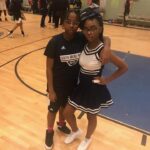
Hello everyone! my name is Kyonah Eaddy (She/Her) and this is my second year attending City Tech. I am a computer information major and I plan to work for Google one day! I was born and raised in The Bronx. An interesting fact about me is that I have an identical twin sister! I grew up having a passion for sports, Basketball is my favorite sport to play. As you can see in the photo my sister always supported what I did in high school. Unfortunately college has separated us, as we are studying to have two different career paths. On my free time I am a part time streamer I love playing video games! I am excited to take this class and meet my other classmates. I wish you all a great semester and good luck.

Week 2 Reading and Writing Essentials.
After I had read “How to Read Like a Writer” by Mike Bunn and “Reading Games: Strategies for Reading Scholarly Sources” by Karen Rosenberg, I immediately noticed something in both of their writing. I noticed that both author’s used a personal story to start off each of their writings. I thought this was interesting because it made the rest of the reading feel real as I feel it gave the writing authenticity. Mike Bunn had an interesting tip which was to continue to ask yourself questions as you read like a writer. I thought this was interesting because I feel that a lot of time when I am reading, I am taking in what is being said at face value and I do not put too much thought into a deeper meaning or motive. Sometimes I will find myself asking questions such as I wonder why the author decided to use a specific word or setting to describe a scene but those times are often few and far between.
In Karen Rosenberg’s article a tip that she gave that I thought was fantastic was that it is sometimes okay to judge a book by its cover. What she meant by this was that you would be able to tell who the target audiences are based on the type of publication that article has. As I read that line I was instantly reminded of my Pysch 1101 class last semester where every week I would read 1-2 articles that were cited in the fashion that Rosenberg had described with a volume number and an issue number. Those readings were painstakingly boring but I never would have put the articles citation and who the primary audience should be. I think that I can potentially use this to my advantage when reading so I know how to prepare myself.
In regards to how can you have a conversation with a text, I believe the Rosenberg is saying that when we read a piece of text, it is almost like having a conversation with the author, the text is the author’s thoughts and the conversation being held is the thoughts and questions of the reader. But then she goes on and talks about using the texts to open up conversation with professors and peers to get a better understanding of the work.
Bunn kept reiterating in his article that a way to get context of a text before you begin reading it would be to ask questions such as “what is the author’s purpose for this piece of writing?”, and “who is the intended audience?”.

